
Water as unexpected teacher through collapse
TL;DR:
Painting is one way to deepen relationship with the land, including water, as a sentient being.
This article offers a preliminary way to think about possible futures for a world transitioning through collapse.
While such questions can be confronting, they also open up possibilities of collective healing.
What does it mean to relate to water as a sentient being when we’re in a process of collapse? This is a question that surfaced through my latest painting explorations.
As one of the 30 artists exhibiting in Aqua Limina in April 2026, I recently took to exploring my relationship with water where I live and work, on Kombumerri Country. I began with curiosity and anticipation for what might eventuate through listening to water’s stories and histories, through presence with the life she supports today. What might water say?
Instead of a neat package of visuals tied to water in this place, I met confrontations and metaphorical walls.
Painting what you can’t see
The first ‘hurdle’ came from realising that I can’t see or be with water in what I imagine to be her preferred “natural” state. Where I live now was once a swampy marsh - The Great Swamp - since terraformed in the mid-century into a land-based host of past and modern architecture with curated lakes and canals. My own home rests on land that was once this swamp, a 5 minute walk from the 1971-created Lake Burleigh, fed by Dunlops canal formed in the 1800s by farmers to dredge the area. The Gold Coast’s breathtaking terraforming disturbed the swamp’s essential fabric. The landscape was permanently changed.
Perhaps as a way to process the loss of the swamp ecosystem, I reached for glimpses of it, longing to see water before the disturbances. I gathered images and historical accounts for my street and surrounding area. I shared with local Aboriginal residents in the journey of relating to water, where I learned that in some canals the water is dead. I painted old maps, relating to the importance of the still-standing places like Burleigh Knoll. I storied with locals who shared their memories, photos and, at times, grief. I painted the changing landscape and architecture through its disturbance - such as the paperbarks and fibroshacks that are now almost ghosts themselves. I sat with the birds, the trees, the grass, the fish, the breeze…
Yet, the visuals slipped through my hands. And of course they did: sentience means capability to evolve and adapt, as water has done here. I must meet water and the challenges she faces now.
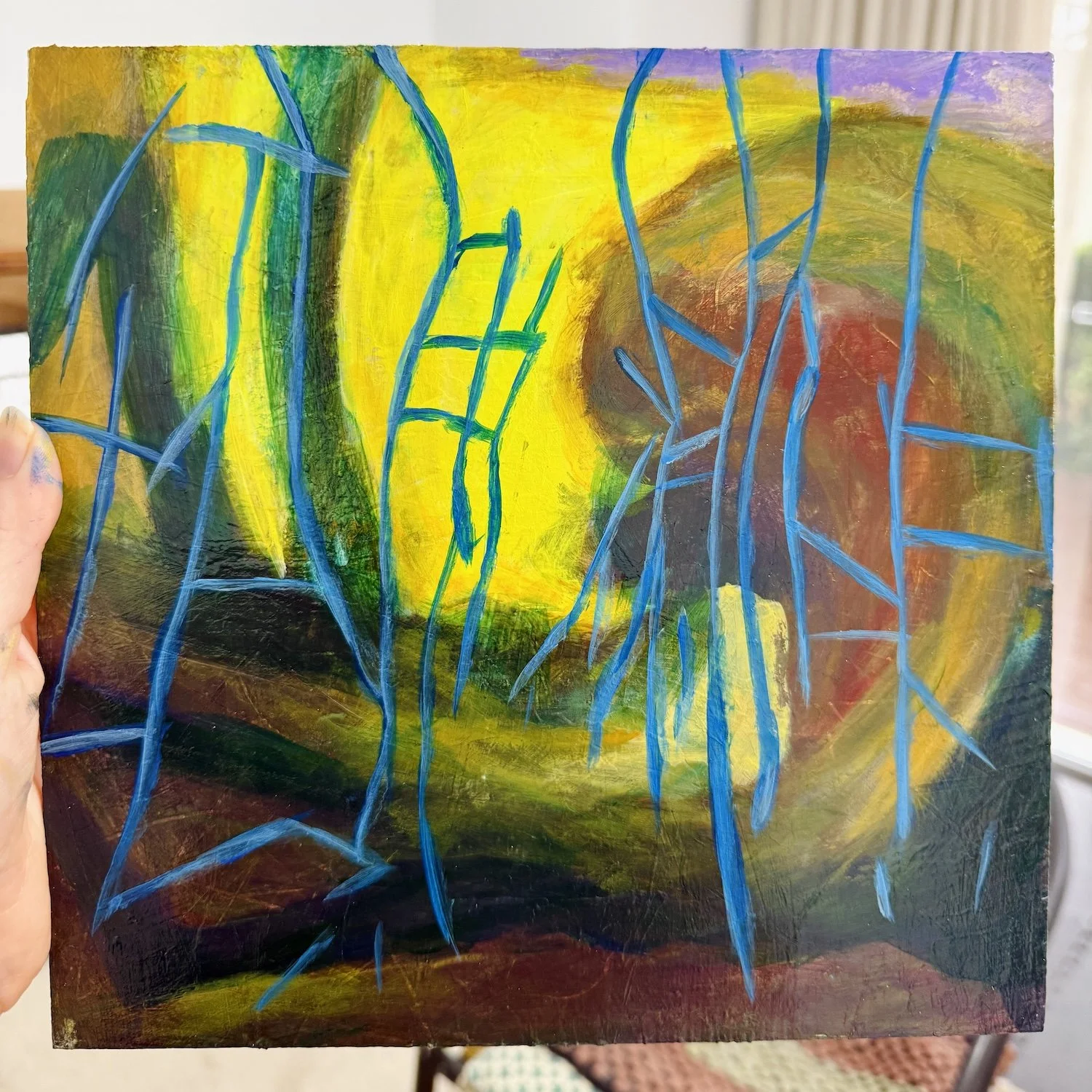
An abstract experimentation with shape and colour to tell the land’s layered story
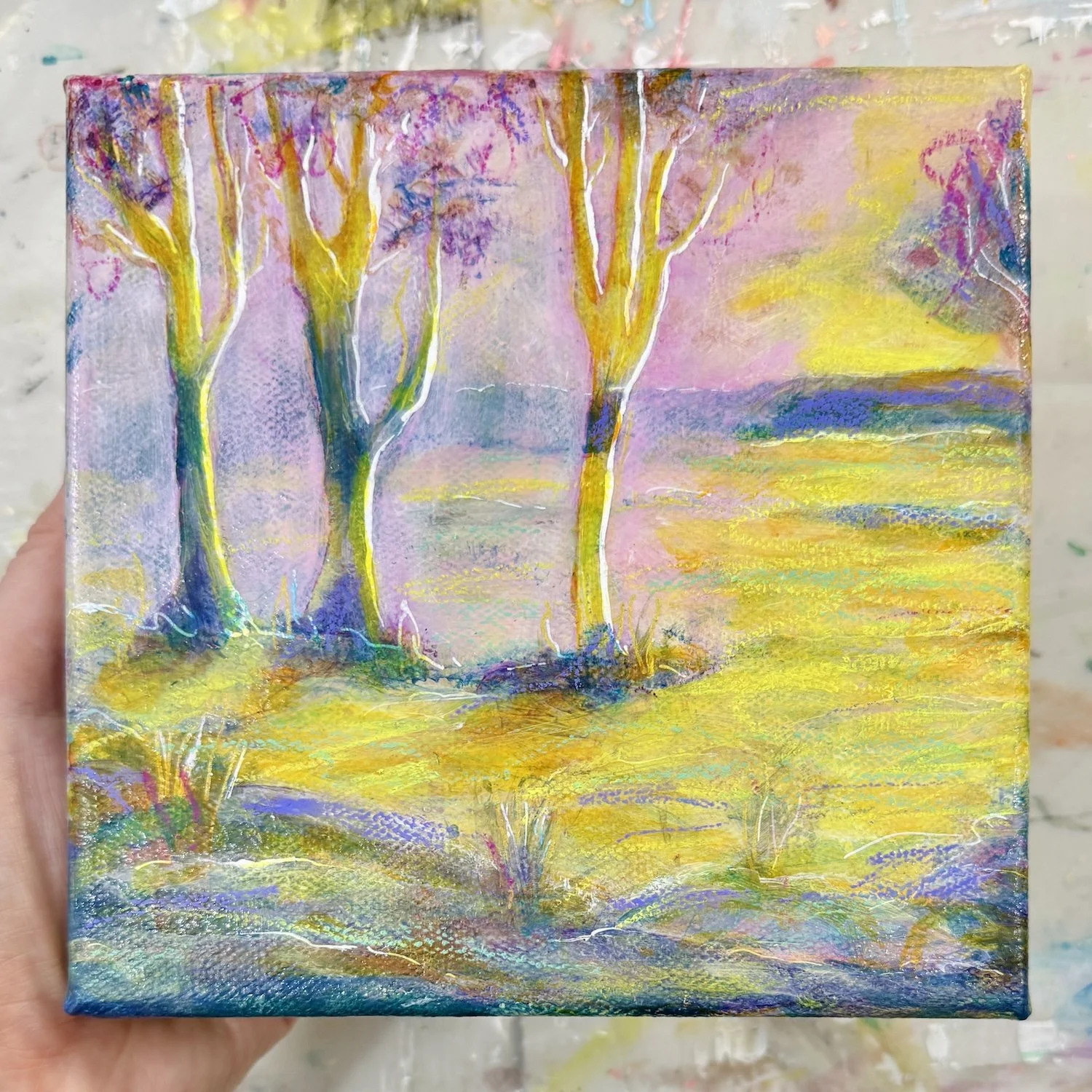
This small work reflects the ghost of the trees and waters of the Great Swamp, where my house now stands
Relating to water’s situation
I knew there was more to water than her lake pleasantries and dreamy coastlines. Indeed, she is home to many swans, ducks, eels, dogs, my neighbours and more. Yet, a walk down neighbouring streets and I often see pool water dumping into the drains, rushing chemicals to the nearby ocean. At the ocean’s edge, I regularly see sea foam after storms, and occasionally from sewage plant leaks. West Burleigh faces plans for an additional quarry, which would disturb water’s natural flow and take from the water table. Annually, Tallebudgera Creek is dredged to plump up Burleigh Beach after its continual erosion. The disturbance of water’s contours and flow is constant.
When I see these practices in the context of climate change, biodiversity loss, over-development and over-consumption, it’s hard not to see that we’re in a process of collapse. The hierarchical separation upon which modernity is premised provides a permission slip to do as we please with the land and any lives positioned as “lower on the hierarchy”. Such is the rationality of Western paradigms. Yet, the comfortable life premised upon endless growth and exploitation cannot continue.
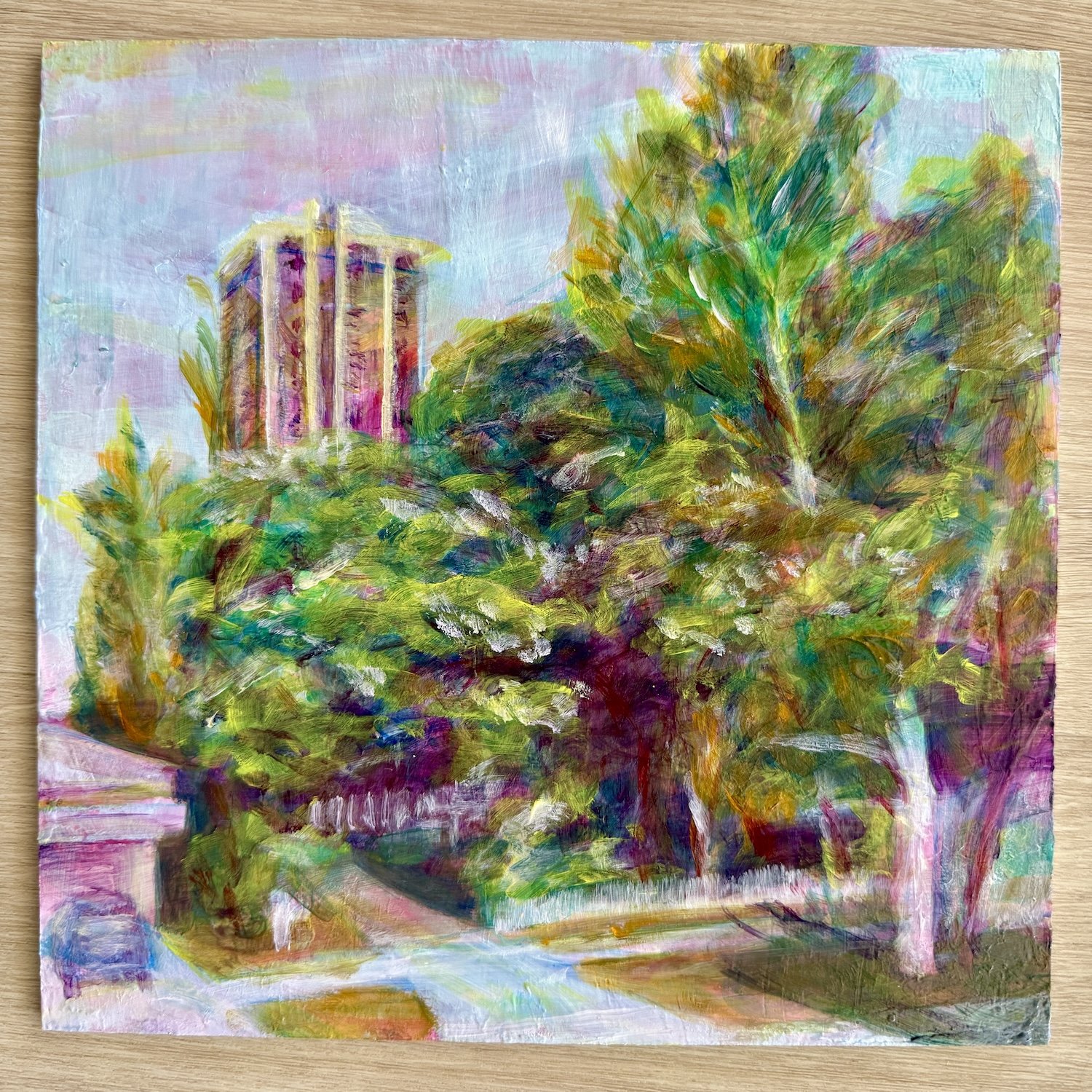
An experimentation to share the story of native flora in a land of constant development
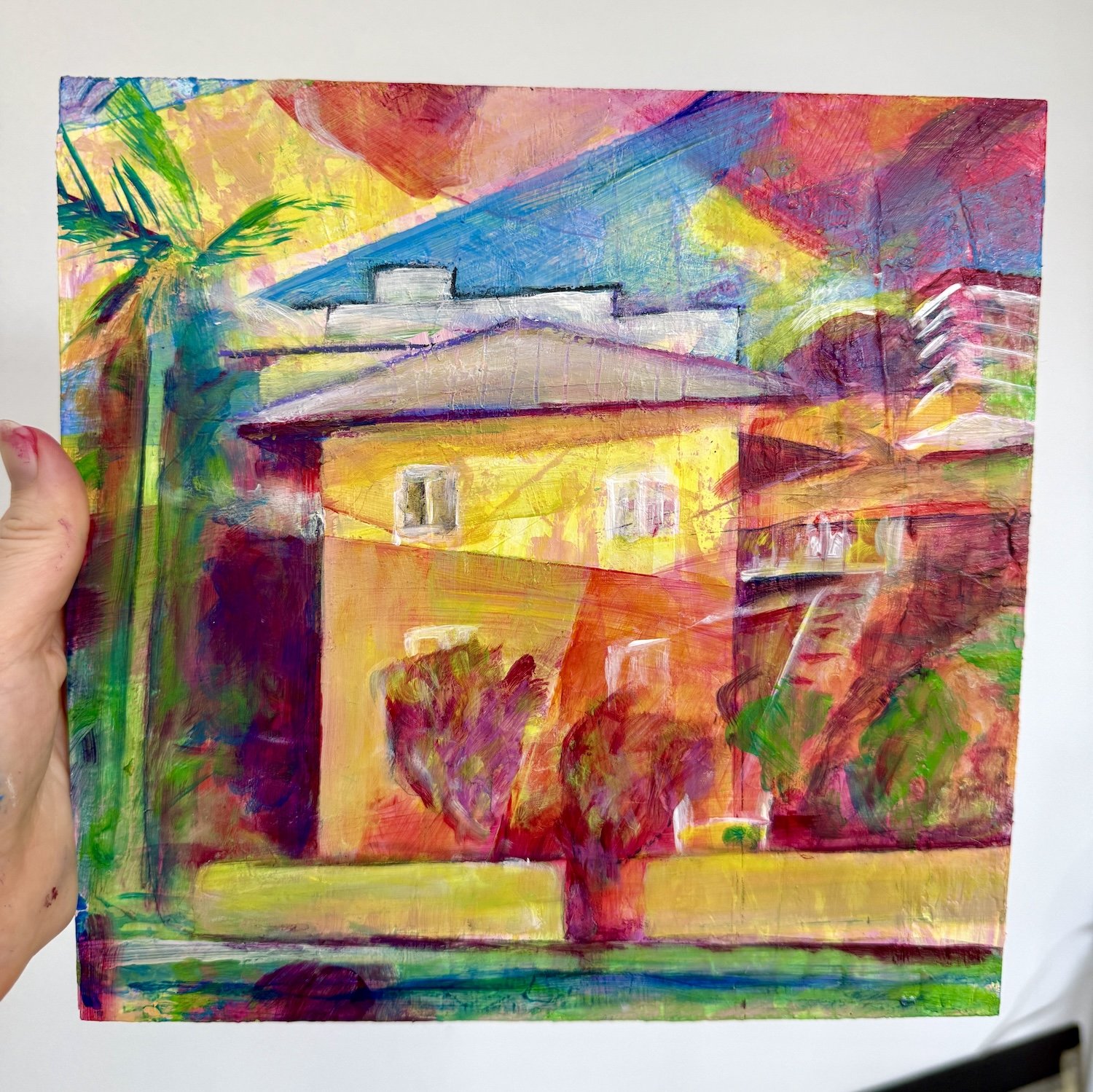
Studying ways to allow colour to speak more loudly in telling the coastal shack stories
Imagining something more
So then, how can I relate to water knowing that we are together in this process of collapse? We are connected: I am everything in this ecosystem, and they are me. To be implicated in this way means there is grief in knowing that the world is not as I - we - wish for it to be. For me, though, the grief and discomfort felt with the magnitude of reality provide a creative prompt, not a block; like a surge of power for the agency and possibility in our multiple futures.
So, while I spend time with water and watch her change over the day and the seasons, and I build relationships and community with others doing the same, I recognise that there is work ahead.
This is another road where my painting, facilitation, research and coaching practices intertwine. Here, to identify a path ahead, I can draw upon my Stepping Stones creative wellbeing framework, which I’ve been evolving since 2022 and weave into my workshops, talks and coaching. Perhaps I’ll introduce this framework in another post, but put simply it has 3 pillars:
Acknowledge and re/connect with where we are
Cultivate radical imagination to dream up a beautiful future
Re/Build - Take action towards your vision
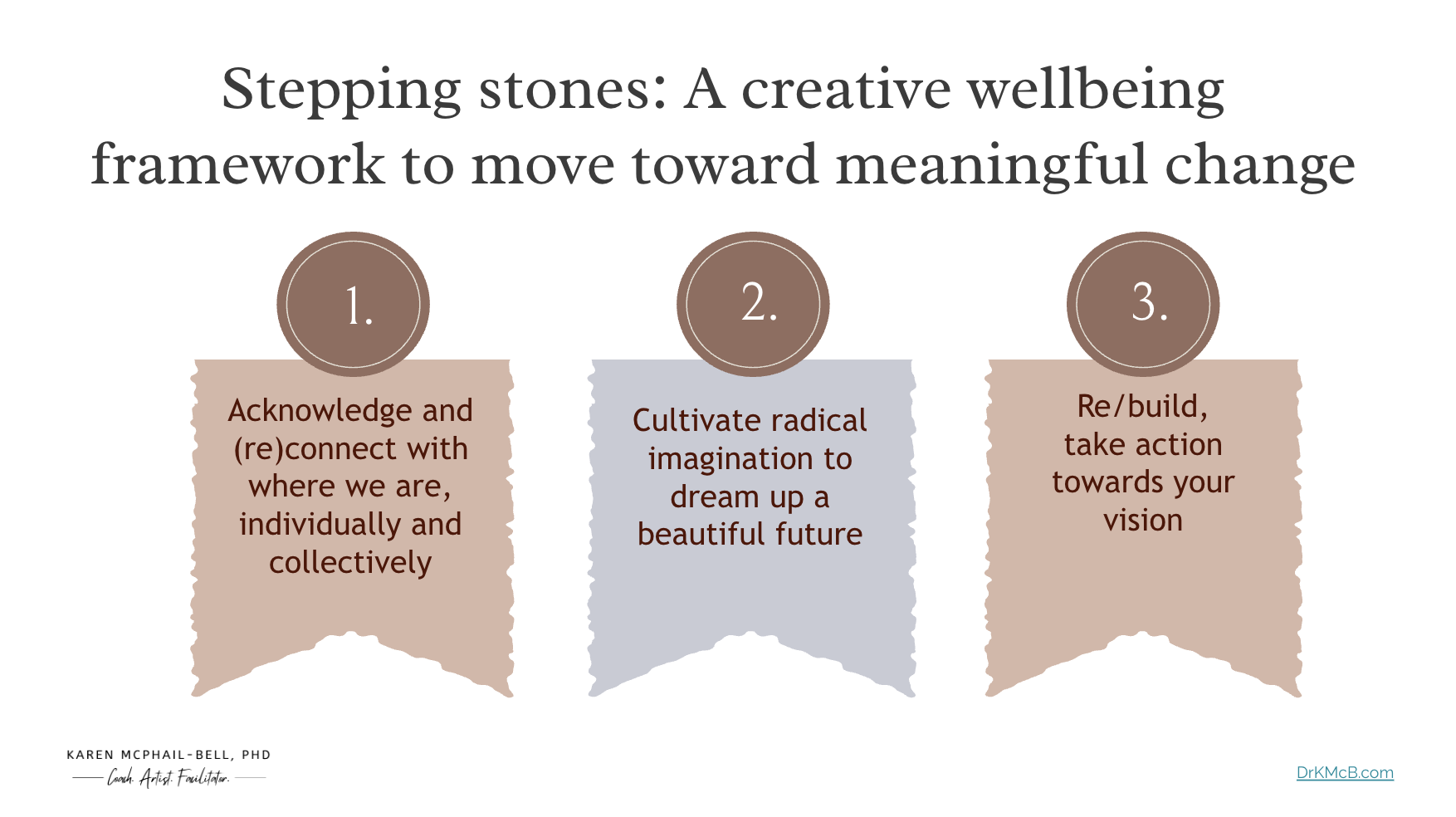
My Creative Wellbeing Framework helps values-driven changemakers to uncover and make the change they desire for themselves and those they serve. A series of arts-based activities and coaching processes support moving through each pillar. I’ve been iterating this framework since I first wrote about it in 2022 (click the image to read).
Like water, we can change the path
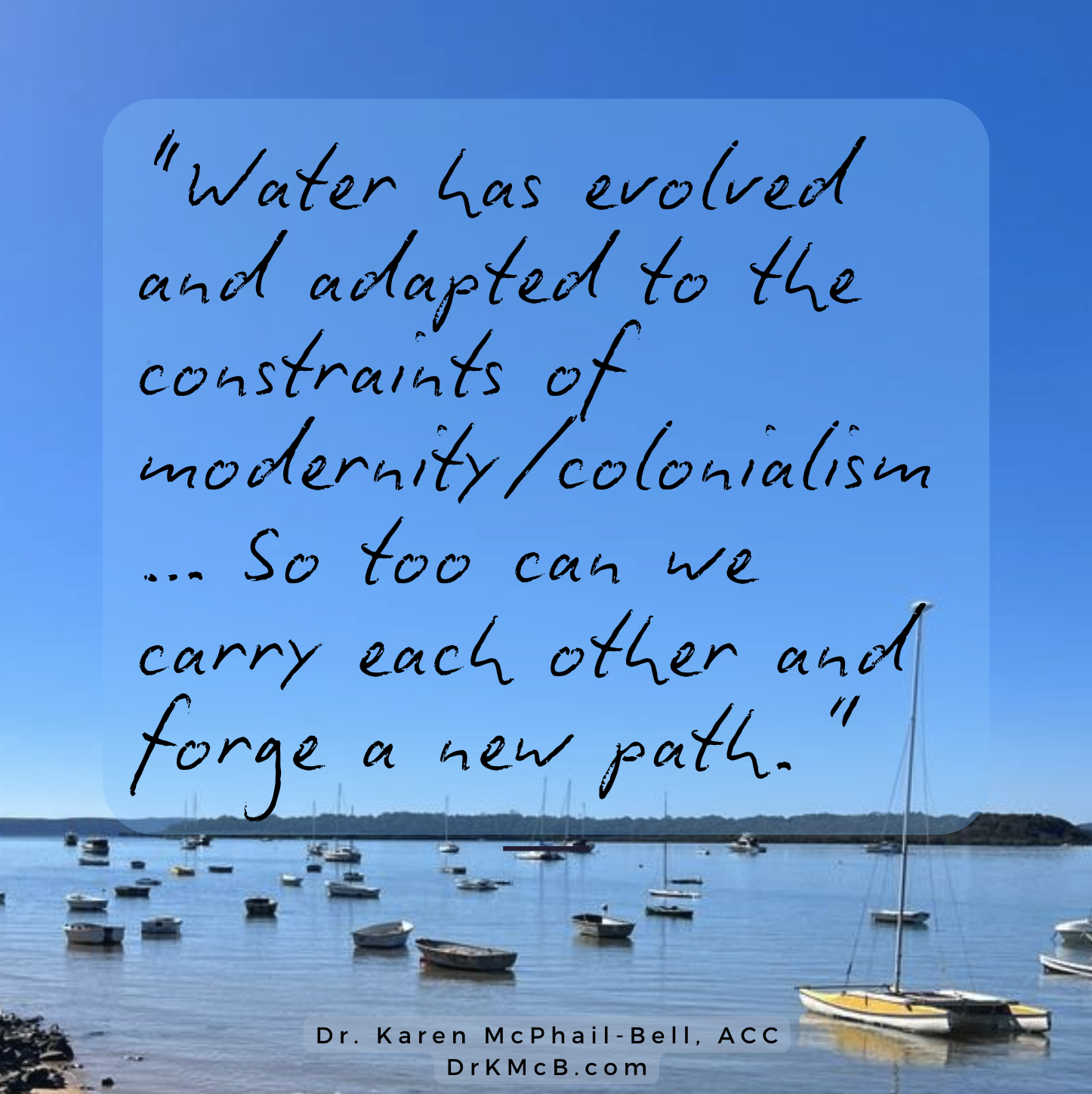
To relate to water as a sentient being has reminded me that Country has much to teach us, including for navigating the complexities of a world facing collapse. Where I live, water has evolved and adapted to the constraints of modernity/colonialism; even when contorted she meanders, carries and deposits objects, connects across waterways and oceans, and occasionally breaks her banks. So too can we carry each other and forge a new path.
So watch this space for where this process takes my creative practice. And join me at Aqua Limina 1-18 April, where my paintings created through the above process will be exhibited.
I’d love to hear, have you been contemplating how to navigate the changes arising from the polycrisis? Do you have a creative way of relating to Country? Please share in the comments.
I am committed to honouring the wellbeing, creativity and leadership of every person. If I can help you or your team with this journey please reach out by contacting me here. Learn more about my coaching services here and workshops and facilitation here.